Thursday, July 09, 2009

Should 39th Become Cesar Chavez Blvd in Portland? Interview on the Mark and Dave show (1190 KEX AM)

(Cesar Chavez Street in Austin, Texas. By Larry Miller via Flickr)

I was interviewed on the Mark and Dave Show on 1190 KEX Am News radio yesterday about the legacy of Cesar Chavez. You can listen in here (the show plays during rush hour from 4-7pm. My interview is during the last hour, about 3/4 of the way through the podcast)

Yesterday, the Portland City Council voted to rename 39th Avenue after Cesar Chavez. Seems like there is a very big political controversy over this. For the past few years, the City Council has made missteps in trying to get a street named for Chavez, angering various groups in the process.

As I said in the interview, I think its appropriate that a major city on the West Coast do something to honor Chavez (especially considering how much agriculture is part of the Oregon economy!) I don't really have an opinion as to whether a street is the best way to do that.

What I think is unfortunate is how the issue of the street becomes one of recognizing Latino/a contributions to the city ( some of the mayor's remarks suggest that this is a way of honoring Latino/a history in Portland). This reinforces the idea that Chavez was an ethnic leader most of all. Chavez always pointed out that the farmworker movement, and the United Farm Workers in particular, was multi-racial. In fact, the first big strike by the farmworkers was organized by Mexican and Filipino workers (led by Larry Itilong). Here is Itilong, alongside United Auto Worker labor leader Walter Reuther, and Chavez:


Personally, I think it would be great if Portland had a public school named after Chavez. Maybe one of the Portland Community College branches? How about a work center for day laborers in NE so they they could have a place to meet, instead of having to stand around the street corners off Burnside? Maybe one that could offer legal advice, provide child care, and even English classes for free? Something that could make a real tangible difference in the quality of worker's lives would truly honor Chavez's legacy.

Labels: , , , , ,

Thursday, January 22, 2009

Citizens Not Americans: Obama's Political Metaphysics on Power and Privilege

Philosopher Linda Hirshman argues that within the first few words of his inauguration speech on Tuesday, Obama changed the political metaphysics of the United States. He opened by calling out to his "fellow citizens" not "my fellow Americans."

Her view is that citizenship harkens back to ancient Greek ideals of someone (she acknowledges the gender and class bias in the ideal) who is prepared to engage in the work of the community--making laws in the Assembly or defending the homeland as a soldier. Citizenship involves an understanding of self that is involved and commitment to one's relations in the civic sphere.

American identity, on the other hand, is about individualism and isolation. It privileges being left alone by government, and by the community, in order to pursue one's one private goals.

For Hirshman then, Obama is calling us back to a more ancient sense of virtue and active participation in public matters. Citizens not Americans.

While Hirshman recognizes that the old Greek role of citizen was built on a foundation of sexism and slavery (free, propertied men had other people to do their work for them, enabling them to engage in all this civic virtue), she fails to recognize that there was another group in the ancient Athens she glorifies. This would be the metics, the resident non-Athenian aliens, who usually were merchants and could utilize some public services, but were not allowed in the law making roles of society. They were forced to accept laws not of their own choosing in exchange for the privilege to remain.

The idea of the metics is important to remember because American citizenship has usually meant something very different than the ancient Greek ideals. Judith Sklar, in American Citizenship: The Quest for Inclusion, points out that American citizenship was always a status role--it meant you were in, you were all right, and usually, you were all white. Groups fought for inclusion into citizenship, not because they wanted to get more involved in the public matters, but because they wanted to be on the inside of power and privilege.

Today in the United States, it is estimated that there are close to 16 million undocumented immigrants who perform many of the same services to the community that the metics did for ancient Athens. They have rights to some public services, but unlike some European nations, most immigrants have no way to influence public decision making. The longer they stay without a voice, the more they become second class members of society who serve the first class citizens. As Michael Walzer has said before in his book Spheres of Justice, such a condition is intolerable in a democratic society

In addressing himself to fellow citizens, is President Obama calling us to civic virtue, or is reminding the group with power and privilege, served by another class of people with neither of those goods, to continue to enjoy their hegemony?

Labels: , ,

Saturday, November 22, 2008

What Should Obama's Global Ethical Priorities Be?

Ethicist Peter Singer outlines some of the moral challenges on a global scale facing the new Obama administration:

1) Restoring the U.S.'s image internationally by following through on the promise to close Guantanamo prison and pulling troops out of Iraq.

2) Helping to usher in reform at the United Nations by making it more democratic--meaning that something needs to be done by reducing the power of the five permanent members of the Security Council: the U.S., the U.K., France, Russia, and China.

3) Increasing the amount of foreign aid the United States provides to the world (currently about $25 billion/year, but still far less, as a percentage of overall GDP, than most industrialized nations)

4) Reducing carbon emissions and finding a way to become part of the discussion on enforcing the Kyoto treaty for the reduction of greenhouse gases.

What other global issues need to be addressed?

I would add a couple of considerations:

a) joining the Rome Statute and becoming part of the International Criminal Court system. The U.S. has failed to join because of worry that the Court might be used by other nations to engage in politically motivated prosecutions of U.S. leader and military personnel. We should move fast to become part of this growing system of global law with a policy of "constructive engagement" so that the U.S. regains its footing as a prime mover of global law and ethical norms. As it is now, our legal ideas are becoming less and less relevant to the world.

b) examining our commitment to trade agreements, such as NAFTA, and other bilateral agreements that we have with numerous Latin American nations and ensure that we are engaging in fair trade. NAFTA has undoubtedly affected immigration to the U.S., and that has raised issues of human rights along the border and the treatment of immigrants within the country (now that we have a vastly expanded immigration enforcement bureau under Homeland Security)

Labels: , , ,

Wednesday, September 17, 2008

The Cost of the American Dream?: Deaths along the Mexican border soar in 2007.


Via luchador@s:

The number of people who have died along the U.S./Mexico border has surpassed the number of American soliders killed in Iraq. Since 1995, 4,827 people have died trying to cross the desert wasteland. In August, 2008, the number of soldiers killed reached 4,138.

Last year, then, almost two people died each day. By the first part of 2008, 275 have died so far.

Labels: ,

Friday, August 29, 2008

Obama on Immigration


Barack Obama's acceptance speech went on for almost 45 minutes yesterday. Here is what he had to say about immigration:

"You know, passions may fly on immigration, but I don't know anyone who benefits when a mother is separated from her infant child or an employer undercuts American wages by hiring illegal workers. But this, too, is part of America's promise -- the promise of a democracy where we can find the strength and grace to bridge divides and unite in common effort."

Not clear what exactly this position is, as the ImmigrationProf Blog points out.

Special kudos to anyone who can guess (without doing a Google search!) who held this view on immigration:

"All of the immigrants who came to us brought their own music, literature, customs, and ideas. And the marvelous thing, a thing of which we're proud, is they did not have to relinquish these things to fit in. In fact, what they brought to America became American."

Labels:

Saturday, August 02, 2008

Star Trek Still Inspires Moral Lessons

What happens to a great ship when it is overcome by xenophobia and decides to get rid of all the aliens?

Don't Deport Me, Scotty!

Labels:

Sunday, June 29, 2008

"There is no house that is not a mausoleum": Reflections on Benjamin and Latino Workplace Death in America

Les Black has a haunting article on the memorial to Walter Benjamin, one of the members of the first generation of the Frankfurt School, who took his own life in 1940. Benjamin was escaping the Nazis and hoped to leave Vichy France and then on to the United States to join the other exiled members of the Frankfurt School such as Adorno. However, he was denied exit by the Spanish Border guards. He decided to kill himself rather than fall into Nazi hands.

On the memorial is inscribed a line by Benjamin: "It is more arduous to honour the nameless than the renowed."

Black takes inspiration from this passage to reflect on the contemporary tragedy of the beach just beyond the memorial. There, the bodies of African immigrants, trying to make their way into the European Union on makeshift rafts and boats, wash up almost weekly. Since 1993, almost 8,800 people have died trying to enter Europe, many of them from Africa.

Black concludes: "This vision of what Europe is turns away from the dark bodies being washed up on the beaches of Puerto Rosario and the faces behind the fence at Melilla. The enthusiastic proponents of a resurgent Europe, not excluding poets and thinkers, would do well to remember those words carved on Walter Benjamin's grave: "There is no document of civilisation that is not a document of barbarism." There is no beach that is not also a graveyard."


This makes me think of a recent government report that shows that Latinos, being the fastest growing part of the American workforce, are also the ones that die as a result of workplace injury more often than other ethnic groups. The causes of these deaths tend to be highway accidents, falling from high places, or being struck by objects (indicating that many Latinos are working in construction and are falling off buildings or being hit by machinery or flying materials).

Not only is most of the food on our tables being handled by Latinos (and largely Mexicans), but most of the new homes and buildings we inhabit or work in were built by Latinos.

Perhaps the memorial we should raise for all the anonymous Latinos who die this way in America should bear this inscription: "There is no house that is not also a mausoleum."

Labels: , ,

Wednesday, April 09, 2008

Memories of Empire, Part One: Absolut(ly) Aztlan


Absolut Vodka has created a huge web flurry with this new ad campaign in Mexico. The ad depicts what an "ideal" world might look like from the standpoint of Mexico--one in which Mexico has the national boundaries it had in about 1821. This was before Anglo-Mexican settlers revolted in the state of Tejas and created the Republic of Texas in 1836; and also before the war of 1846-1848 with the United States (regarded by many to have been an aggressive and unjust war for territorial expansion. Young Abraham Lincoln, then a Congressional Represenative from Illinois, voted against the war. Thoreau went to jail for failing to support it with his taxes. Even Ulysses Grant was shocked at the the conduct of U.S. troops during the war).

Blogs all over the web are calling for a boycott of Absolut, calling the ad "racist" and in poor taste.

While Mexico does have many monuments to heros who fought in the war against the United States, I hazard a guess that most Mexicans are not dreaming of any Reconquista (despite what the nativists are arguing).

What strikes me as more interesting is how vociferous and angry the responses have been to this ad among conservative voices.

I'm sure that the anger is not a reaction of guilt for the imperalist impulse that the U.S. embodied in the 19th century, leading it to land grab so much in Latin America. Its more likely the case that the reaction is part of the growing fear being felt in the U.S. about a loss of power and stature on the world stage. Gregory Rodriguez calls the new border fence a "670 mile-long shrine to American insecurity".

Labels: , ,

Monday, December 17, 2007

Hate Crime in Spain

Via Guanabee:

I've been recently tracking examples of racist and anti-immigrant sentiment in Europe. Here is a shocking video from Barcelona, Spain. A young Ecuadorian woman was attacked by a Spanish man who entered the metro train. Apparently, he was ranting on about various racist things on the phone prior to the attack. He told her to go back to where she came from, calling her various names, all the while kicking her in the face.

Labels: , ,

Tuesday, November 27, 2007

Racism in Europe and and the Democratic Possibility of Immigrants

Lest you think immigration is only an American issue, this article from the Economist clarifies how Western Europe is undergoing a spasm of xenophobia and outright racism against foreigners.

The racism is unmistakeable. You can watch this video, produced by the Swiss People's Party, for the most recent parlimentary campaign in which the SPP won a sizeable plurality. The video contrasts the "heaven" that could be Switzerland or the "hell" that will result if the leftists win and bring all their dark-skinned friends with them.


Yet, the problem is not completely racial. Some, like French President Sarkozy, are railing against Turkish entry into the EU, of course, but many in Europe are opposed to "white" immigrants from Eastern Europe as well. What is interesting are the contrasting attitudes. As this article makes clear out about Polish immigrants to the UK, many people see them as harder working than natives, and yet feel that they might pose a social problem by taking away jobs. While the situation of Polish immigrants is unique (many are highly educated and yet doing menial labor), the rhetoric surrounding their presence sounds familiar to American ears about Mexicans.

What is interesting about the above article from the Christian Science Monitor is the point about cultural attitudes. Poles are excited about learning new cultural and political attitudes and bringing then back to Poland--a kind of cultural remittance. But as this article examines, maybe there is something that Brits can learn about democratic renewal and the revitalizing of public spaces of discussion from the presence of Poles. Perhaps this can be lesson to Americans--maybe we can learn how to be more democratic by listening to the experiences of our immigrants and take lessons from the way they live their lives around us instead of assuming that it is only they that have something to learn about democracy from us.

Labels: , ,

Monday, August 20, 2007

"All the world needs is xenophilia, sweet xenophilia"

Many of us are aware that the United States is perhaps the stingiest of industrialized nations in terms of providing nonmilitary foreign aid. As Peter Singer aruges in his book, "One World", the fact that we spend several billion dollars on soda pop and movie tickets each year, and less than $20 billion dollars on helping to provide drinking water and medicine to the world, is a moral failing of our society.

But what about the Danish? They are among the most generous of the industrialized nations. And yet, they have the most restrictive immigration policies in Europe. This has lead to a phenomenon that some are calling the "Copenhagen syndrome"--the Danish want to help the poor of the world, as long as they stay in their own neighborhoods and don't come to Denmark. Helping a neighbor is important, as long as they don't come over for dinner.

The Copenhagen syndrome raises an interesting question about our global village: is it moral to help developing nations in a globalized world but, at the same time, prevent the free flow of immigrants into our society? The United States, of course, is not committed to either the aid or the free flow. Should it be?

Christopher Phillips, in this interview from Philosophy Now, talks about his new book, "Socrates in Love". Phillips says that the most important variety of love he studied in preparing the book is xenia, the love for strangers. He describes how this does not mean that we must actually care for each single person we encounter, but that having xenia means being open to the new experience that the stranger offers, including the possibility of wisdom.

We might say that the Danish fail by this standard. They are generous, but they are not virtuous, in terms of xenia, if they are not open to having strangers come to live in their midst.

How important, then, is the stranger to our moral development in a global village?

Labels: , ,

Tuesday, May 01, 2007

May 1, 2007: The Last Days of the Republic?


May 1, 2007 is, of course, the worldwide worker's holiday. Today, millions of people will celebrate and honor the contributions of labor to the world we inhabit.

May 1 has also come to be a date in the history of the immigrant justice movement here in the United States. Last year at this time, millions of immigrants and their supporters marched in the streets of major American citizens, demanding attention to the increasingly punitive attitude of lawmakers toward the men and women who work in some of America's most dangerous and difficult industries. These marches brought immigration reform before the minds of many. However, over the summer of 2006, lawmakers stumbled and the possibility of any legislation passing by the end of the year evaporated.

Immigrant justice supporters are trying to revive the movement by planning a series of events, marches, rallies on May 1, 2007 around the nation. In some places, supporters are being asked to wear white, red, or blue shirts to show their solidarity with the movement and with the ideals of justice in America.

A recent editorial by Peter Phillips raises some very troubling questions about whether those ideals of justice have any room in the United States any longer. Phillips argues that the threat of illegal immigrants pouring over the border has been used to justify the building up of a national security state that really dispels the idea that this nation is a democratic republic. Increasingly, Americans claim that the only major institution they trust is the military--more so than Congress, or the President, or the news media. In this discussion from Harper's Magazine of 2006, military officals discuss why they think that a military take over of American society would be unlikely--but they admit that a large scale terrorist attack might push leaders toward that kind of militarization. As Phillips points out, with new federal legislation enacted this year, the President has the ability now to station regular Army and National Guard units on the streets of the United States without having to have the consent of local officials.

As thousands of immigrants and their supporters gather today, seeking to demonstrate their willingness to share in the fruits and burdens of American society, perhaps we all need to stop and ask: What kind of society are they asking to be a part of?

Labels: ,

Wednesday, January 10, 2007

Immigration and the Globalization of Food

The New York Times reports today that the new Democratic leadership is considering reviving immigration legislation that floundered because of Republican opposition right before the November elections. The new legistlation would create paths to citizenship for immigrants and their families who can show that they have been working and not breaking criminal law that poses physcial threats.

The article reports that the immigration reform movement is getting support from American farmers who last year had to watch thousands of acres of crops go to waste because there were not enough workers during harvest time. One farmer claims that if some reform doesn't occur, allowing Mexican labor to work the fields, then key agricultural industries will be "outsourced" to foreign countries.

This globalization of the food chain is worrisome not only because of the loss of American agricultural jobs and the erosion of American farmers. It also raises questions about the health and quality of the produce in the chain.

A couple of years ago, The Orange County Registar did an investigation which found high levels of lead in candy imported from Mexico. Much of the contamination came from the packaging of the candy and there were also indications of lead contamination in the soil where the chile was grown that was put on the candy.

This reminded me of accounts by a friend who studied farmworker conditions in Chile and told me that pesticides are continually used on grapes grown there. It turns out that in some seasons almost 90% of the grapes available in the United States are grown in Chile. In fact, some groups argue that significant portions of the fruits and vegetables imported to the United States test positive for high levels of pesiticides, some which are banned in the U.S. Recent studies show that children are much more sensitive to these chemicals and their effects.

In a globalizing world, concerns of immigration reform matter for the health and safety of all.

Labels: , ,

Sunday, December 17, 2006

Immigration and Family Values: "All They Will Call You Will Be 'Deportee""


Our friend Dennis alerts us to the week's news about the large immigration raids that netted about 1300 undocumented workers. The raids, part of Operation Wagon Train, raised another fear around immigration: identity theft. Many workers use fake IDs with old Social Security numbers. There is a booming underground business in these IDs (called mica chuecas). What was left out of the reports by Homeland Security this week is that these fake IDs held by undocumented workers are generating billions of dollars in Social Secuity taxes. Most of this money, taken out by employers in the form of payroll taxes, will never been seen by the workers themselves, but goes into the general SSA fund.

What many people found hard to deal with in these raids was how they separated families. Hundreds of children around the country had their parents arrested and husbands and wives were separated from their spouses.

This separation of families is not something new to Mexicans in the United States or to immigrant families now. In 1931, the United States mounted a massive repatriation program that sent almost half a million Mexicans and Mexican Americans back to Mexico. Many people were arrested and not allowed to contact their families. Many were actually American citizens, and not undocumented aliens. The plight of this group was captured in song by Woody Guthrie's song "Plane Wreck at Los Gatos".


A wonderful documentary that captures the displacement and loss of family unity because of immigration is "Letters from the Other Side". I really recommend it for anyone who wants to see how trade policies such as NAFTA have affected rural Mexican families and put pressure on so many young men to cross the border looking for work. The result over the last 12 years is many communities in Mexico in which there is nothing but women and children trying to scrape by economically, dealing with the emotional loss and an indifferent Mexican government.

Labels: , ,

Wednesday, October 11, 2006

Immigration and the Seige Mentality of Whiteness


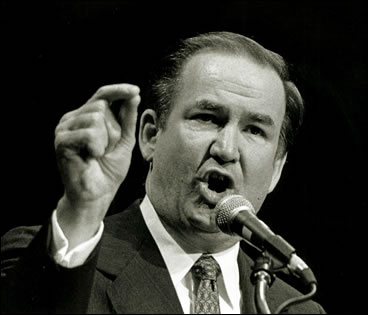
An interesting post on AlterNet by the folks from the Southern Poverty Law Center on Patrick Buchanan's most recent book "State of Emergency: The Third World Invasion and Conquest of America" raises the question: if this work is blatantly racist, what explains its steady hold on the New York Times Bestseller List?

Buchanan seems to dismiss the idea (that is central to other more nativist works that have treated the subject of Latino/a immigration to the United States, such as that of Samuel Huntington) that the United States is a society built around certain ideals of democracy, freedom, rights--what is called by sociologist Gunnar Myrdal as "the American Creed". Buchanan writes: "This idea of America as a creedal nation bound together not by 'blood or birth or soil' but by 'ideals' that must be taught and learned ... is demonstrably false." He locates the threat to the U.S. not in people who may not uphold the Creed, but in people who are simply not of European descent. Its worth repeating the claims he makes in the book as posted by AlterNet:

Excerpts from "State of Emergency, The Third World Invasion and Conquest of America":

"Our ancestors were not paralyzed by guilt. Confident in their culture and civilization, they believed in their superiority over what Kipling had called the 'lesser breeds without the law.'"

"Was not Western civilization vastly superior to the indigenous civilizations it encountered and crushed, from the Aztecs and Incas in the Americas to the Muslim, Hindu, Buddhist, Taoist civilizations from Africa to the Far East?"

"Against the will of the vast majority of Americans, America is being transformed ... we are witness to one of the greatest tragedies in human history."

"Though the South remained segregated [before the Civil Rights movement], culturally, we were one."

"California is becoming -- indeed, has become -- a Third World state."

"Thus the world's finest five-star hotel, the United States of America, becomes the flophouse for the planet."

"Since Americans of European descent -- unlike Germans -- are not into sackcloth-and-ashes, but take immense pride in their ancestor's achievements and bridle at reverse discrimination, it is hard to see a happy future of peace and reconciliation [if white guilt continues]."

"This idea of America as a creedal nation bound together not by 'blood or birth or soil' but by 'ideals' that must be taught and learned ... is demonstrably false."

"America faces an existential crisis. If we do not get control of our borders, by 2050 Americans of European descent will be a minority in the nation their ancestors created and built."

"A new border war has begun with the first signs of an 'intifada' to retake control of the Southwest."

I certainly don't recommend evaluating a book by looking at quotes taken out of context, but Buchanan does have a history of seeing complex political and economic issues in terms of a grand culture war between European societies and the "rest of the world." On the one hand, this is problematic because he does not explain very well what the "West" is; nor does he recognize the enormous diversity of cultures and ideals within Europe that make it difficult to think of it speaking in one voice.

On the other hand, I want to ask: what is it about this discussion that taps into the imaginations and feelings of vulnerability of so many Americans, making this book popular? The thread of comments on the AlterNet post is very interesting--many people wrote in to say "Ignore Buchanan's obvious racism, but don't dismiss the idea that immigration IS harming the American middle class in serious ways."

A very important work that came out recently is "The New Rural Poverty" and it does a very good job of laying out the policy proposals around immigration and the extent of the poverty surrounding immigrant communities in the United States. I found some claims made at the end of the book very eye opening. Many people argue that immigrant labor allows middle class Americans to have cheap food and that without it a lot of fruit and vegetables would become luxury items.

The authors point out that the percentage of the average family's income spent on fresh produce is actually very small (a sad commentary on our diets) and that raising wages for farm workers would not substantially increase food costs for American families. Raising wages would raise costs for growers, however, who would stand to see their portion of profit and the worth of their land decrease. At the same time, many growers resist mechanizing farm work because of cost. The result is the reliance on a relatively cheap labor force that is at the same time deepening poverty in rural areas--and that does come back as a problem for the middle class in terms of burdens on the social safety net. But its unlikely that a conversation can get started on this level with the kind of ahistorical, apolitical vocabulary injected into the public sphere by people such Buchanan.

Labels: , ,

Saturday, September 16, 2006

Global Citizenship on the Horizon?


An article this week from the Economist confirms a point that came up in our podcast on immigration--immigration is increasingly a worldwide phenomena and people from developing nations are on the move in the hundreds and thousands. The European Union is going to meet to discuss immigration policy so that member nations are not undercutting one another's immigration policies. Hearings in Congress this summer have stifled the issue here in the U.S., even though Congress reports that the number of people dying along the border has almost doubled since the 1990s.

The Ecnonomist, however, recommends that the EU not take too much power away from its member states in setting immigration policy because citizenship is a concept that nation-states have a right to determine, not supra-national entities such as the European Union. This seems like a curious claim. In our podcast, Tony Vogt, Lisa Gonzales and I discussed how so much of the immigration we are witnessing today is a result of the pressure from economic globalization on developing countries. Victor Vargas echoed this point when discussing the politics of Mexico in July. It seems as if we are willing to talk about the free flow of goods and services across national boundaries in a globalized world, but we are still hesitant to talk about what it would mean to grant human beings those same political and civil rights to traverse territory. This brings up the issue of cosmopolitian citizenship. Should we be moving more and more toward the idea of guaranteeing human beings various kinds of rights that recognize we are not necessarily tied to one nation-state territory? This is the view maintained by David Held , who argues that we need to start recognizing the multi-layers of government that affect human beings today. Such a view does not mean that the nation state is now a "zombie" concept, but recognizes that nation-states, even very powerful ones like the United States, cannot control all policies that deeply impact the lives of people living within its territory. Is the idea of being a citizen of the world workable at last, or is this still too much of a utopian fantasy? What other ways are there to protect the well being of the thousands of people who are seeking to enter the U.S. and Europe and escape global poverty?

Labels: , ,

Monday, August 14, 2006

No Human Being is Illegal


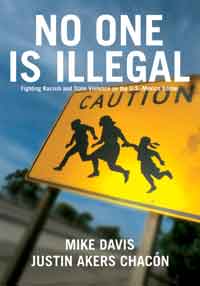
Listeners who enjoyed the podcast on the ethics of immigration will enjoy Justin Akers Chacon and Mike Davis's new book, "No One is Illegal". Mike Davis provides a history of vigilante justice in California since the signing of the Treaty of Guadalupe Hidalgo in 1848. He shows how lower middle class communities formed associations to keep immigrants and labor organizers in check, usually through vicious attacks and coaltions with business leaders and farmers to rig political processes. Davis ends his short section by suggesting the the Minutemen are simply the most recent manifestations of this vigilante history. Chacon does a masterful job of giving social and economic context to the recent waves of Mexican immigration, trying to show why it is largely a result of changes in Mexican fiscal policy over the last thirty years, as well as neoliberal corporate globalization that is changing how Mexico and the United States rely on one another. His analysis clearly supports the contention made by Lisa Gonzales in our podcast that middle class life in the United States is largely propped up by the presence of these low wage workers.

The most recent issue of The Nation magazine focuses attention on the New Nativism that has arisen in the United States. The Nation series contains an insightful article by Bob Moser that talks about the wave of Latino immigration in the South. Another piece dissects the political messages of CNN's commentator Lou Dobbs who seems to be engaging in a one person crusade against Mexican immigration and spreading coded white supremacist ideas over cable news.

The immigration proposals that came out of the Senate have stalled this summer as the House has called for hearings all around the country to study the issue more. This seems like it might be a stalling technique so the issue will die out before the November Congressional elections. There is also word on the street that immigration advocates are hoping for the same thing because they disapprove of the proposals as they have been watered down by the Senate. The farm workers union here in Oregon, PCUN, has issued a statement that suggests this idea.

Labels: ,